
1971 Ford Capri Restoration
A Capri with Character
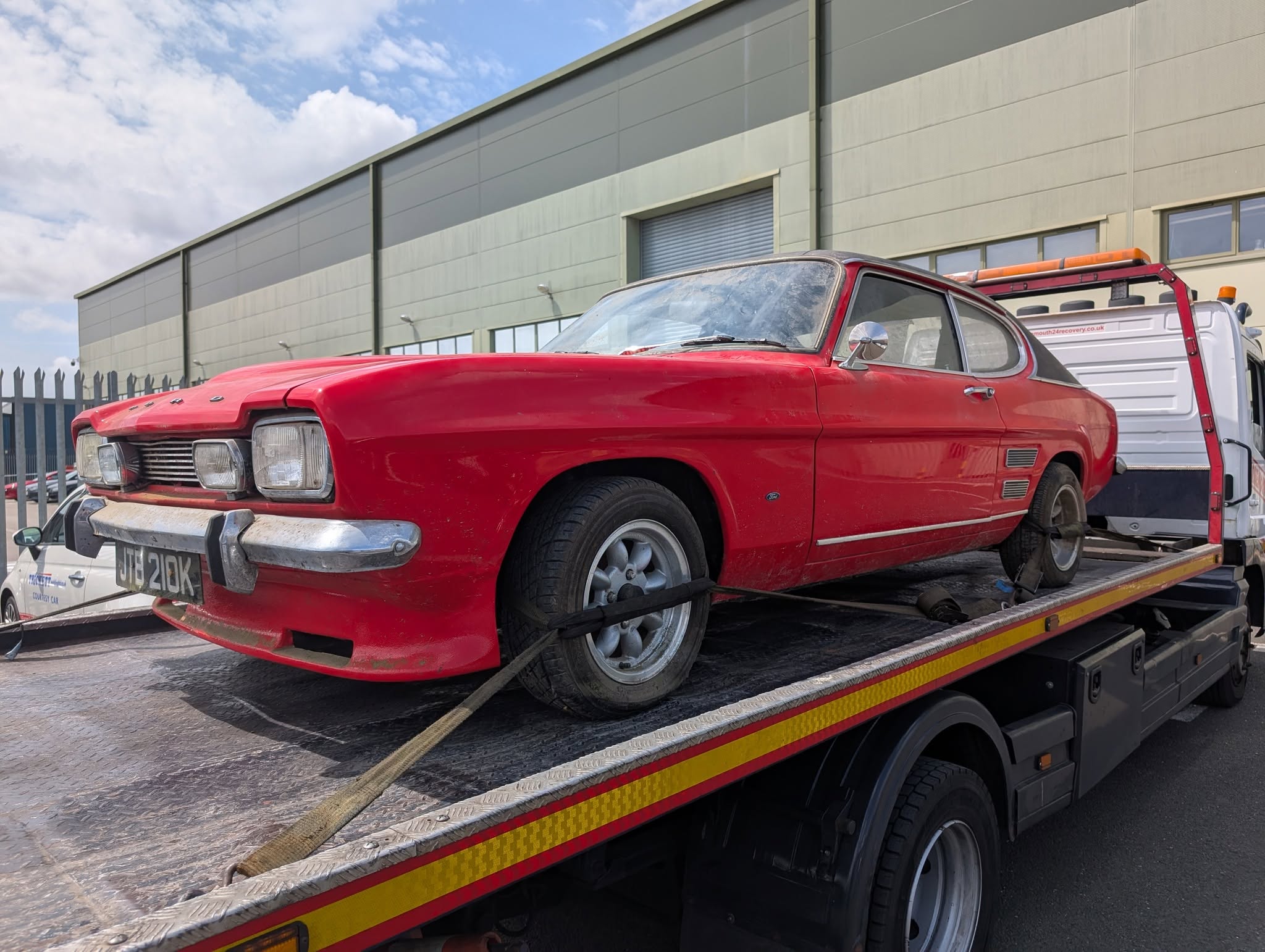
The Capri arrived at Trickett Welding in July 2025, having spent almost five years off the road after a fuel leak brought an end to its regular use. Originally delivered to us for recommissioning, it soon became clear that years of storage, combined with the poor standard of previous paintwork and repairs, meant the car deserved far more than simply being returned to running order.
With fresh fuel, careful attention to the ignition system and routine recommissioning work, we soon had the 3.0-litre Essex V6 running beautifully once again. A comprehensive inspection, including compression testing and a series of mechanical checks, confirmed the engine remained in excellent health. Rather than carrying out an unnecessary rebuild, we chose to preserve the original engine and focus our efforts on restoring the rest of the vehicle to the same standard.
What began as a mechanical recommissioning project soon evolved into a full restoration, with the aim of returning this much-loved Capri to a condition that reflected both its history and its significance to its owner.
1. The Project Begins
The Capri arrived at Trickett Welding in July 2025, having spent almost five years off the road after a fuel leak brought an end to its regular use. Originally delivered to us for recommissioning, it soon became clear that years of storage, combined with the poor standard of previous paintwork and repairs, meant the car deserved far more than simply being returned to running order.
With fresh fuel, careful attention to the ignition system and routine recommissioning work, we soon had the 3.0-litre Essex V6 running beautifully once again. A comprehensive inspection, including compression testing and a series of mechanical checks, confirmed the engine remained in excellent health. Rather than carrying out an unnecessary rebuild, we chose to preserve the original engine and focus our efforts on restoring the rest of the vehicle to the same standard.
What began as a mechanical recommissioning project soon evolved into a full restoration, with the aim of returning this much-loved Capri to a condition that reflected both its history and its significance to its owner.
2. Vehicle in the Workshop - Stripping Begins
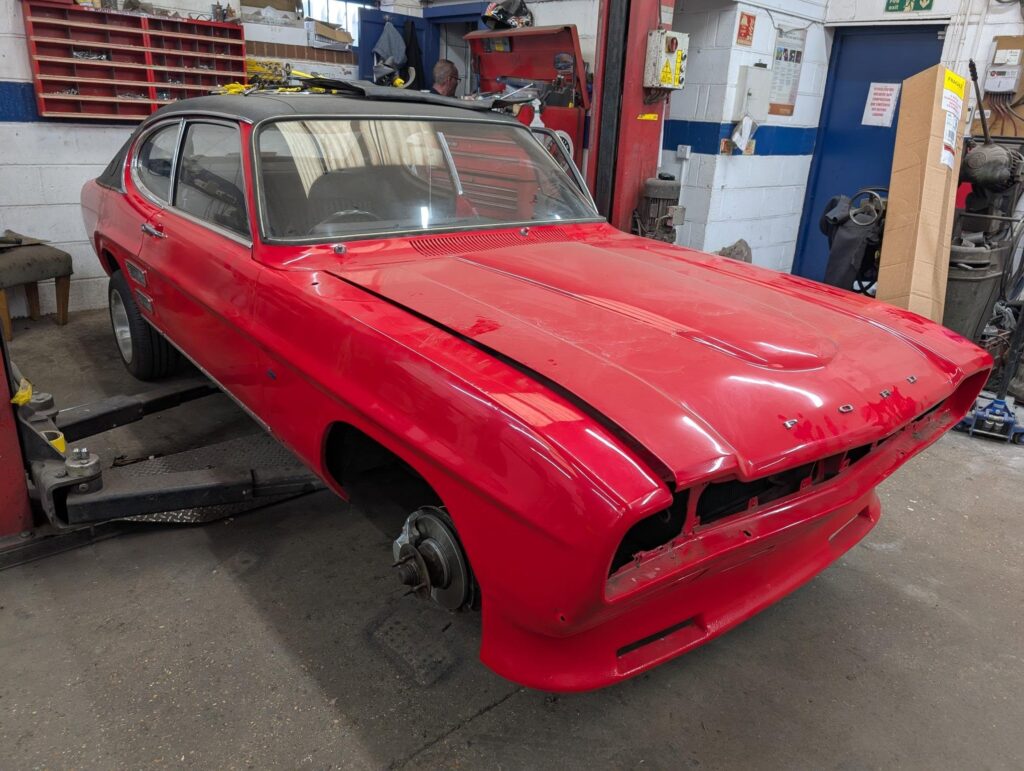
With the decision made to carry out a full restoration, work began in earnest. Every component removed from the Capri was carefully labelled, catalogued and safely stored, ensuring an efficient and accurate reassembly once the project was complete.
As the strip-down progressed, the true condition of the bodywork became increasingly apparent. Previous repairs, poor-quality paintwork and hidden corrosion concealed beneath the bright red finish were gradually revealed, confirming that a full restoration had been the right decision.
Wherever practical, original components were refurbished and retained rather than replaced. Preserving the car’s character and originality remained a priority throughout the project, with replacement parts used only where necessary to achieve the quality, reliability and longevity expected of a restoration of this standard.
3. Extensive Corrosion Revealed
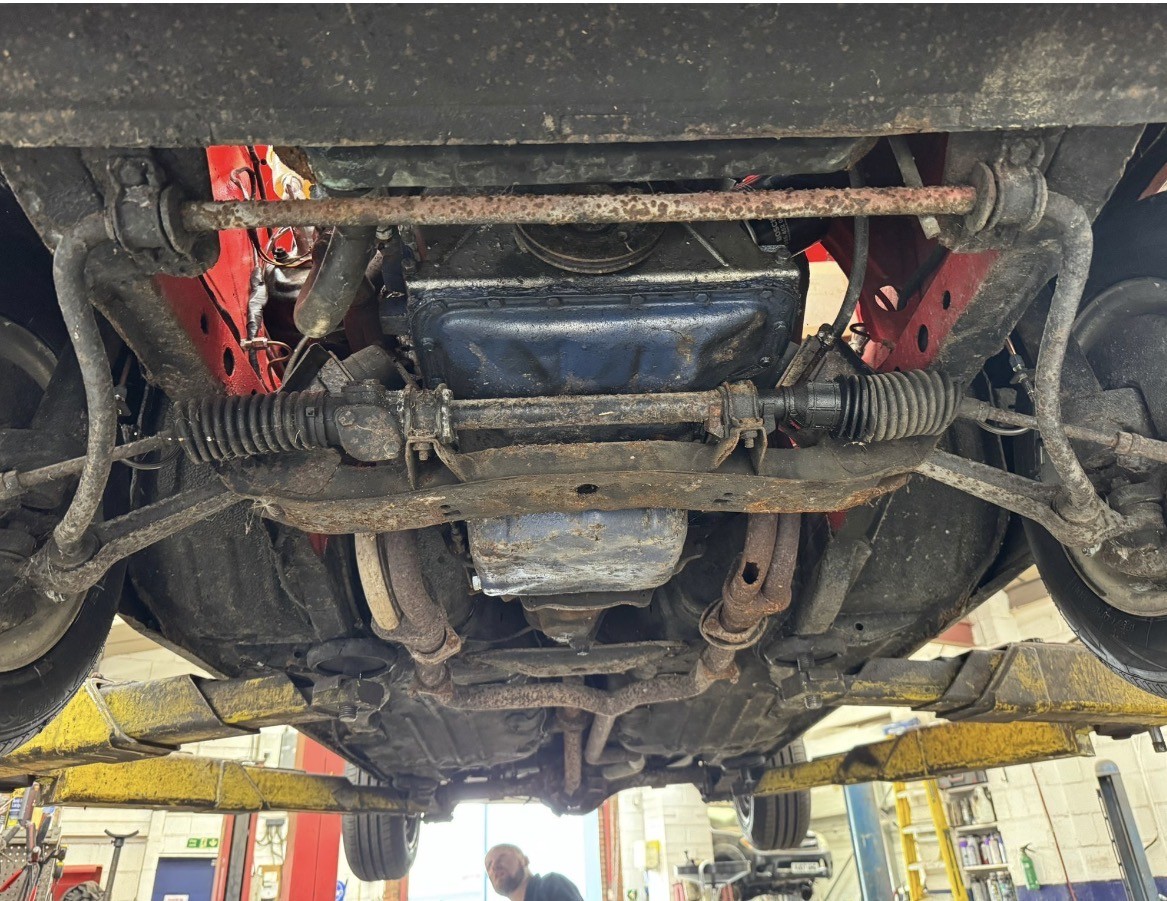
With the Capri on the lift and the underside fully exposed, the true extent of the corrosion became clear. Although the bodywork attracted much of the initial attention, extensive structural repairs were required beneath the vehicle before it could be restored to the standard we were aiming for. Years of use, previous repairs and prolonged storage had all taken their toll, while many suspension, steering and exhaust components also showed significant deterioration.
Structural corrosion repair has been at the heart of Trickett Welding for more than 50 years, and this Capri was no exception. Every affected section was cut back to sound metal before new steel was carefully fabricated and welded into place, restoring the vehicle’s original strength and integrity rather than simply concealing the problem. Although much of this work would ultimately remain hidden, it formed the foundation of the entire project, ensuring the Capri could be driven and enjoyed with complete confidence for many years to come.

4. Back to Bare Metal
The Capri was carefully stripped back to bare metal, revealing the true condition of the body beneath decades of paint, filler and previous repairs.
Returning a bodyshell to bare steel is one of the most important stages of any high-quality restoration. It allows every panel to be thoroughly inspected, ensures any remaining imperfections are identified and corrected, and provides the ideal foundation for the repairs that follow. Although labour-intensive and time-consuming, it is the only way to achieve a finish that will stand the test of time.
With the body fully exposed, the Capri was ready for the next stage of its transformation.
5. Weld-Through Primer – Protecting Hidden Surfaces
Before welding repairs could begin, the Capri’s bodyshell was thoroughly prepared and coated in weld-through primer. Unlike conventional primers, weld-through primer is specially formulated to allow new panels to be welded into place while protecting the overlapping steel surfaces from corrosion.
Once the repair panels have been fitted and welded, these hidden areas can no longer be accessed. Applying weld-through primer at this stage protects the surfaces most susceptible to future corrosion, safeguarding the repairs from the inside out. Although this work will never be seen once the restoration is complete, it is a vital step in producing durable, long-lasting structural repairs.
6. Body Repairs and Welding Underway
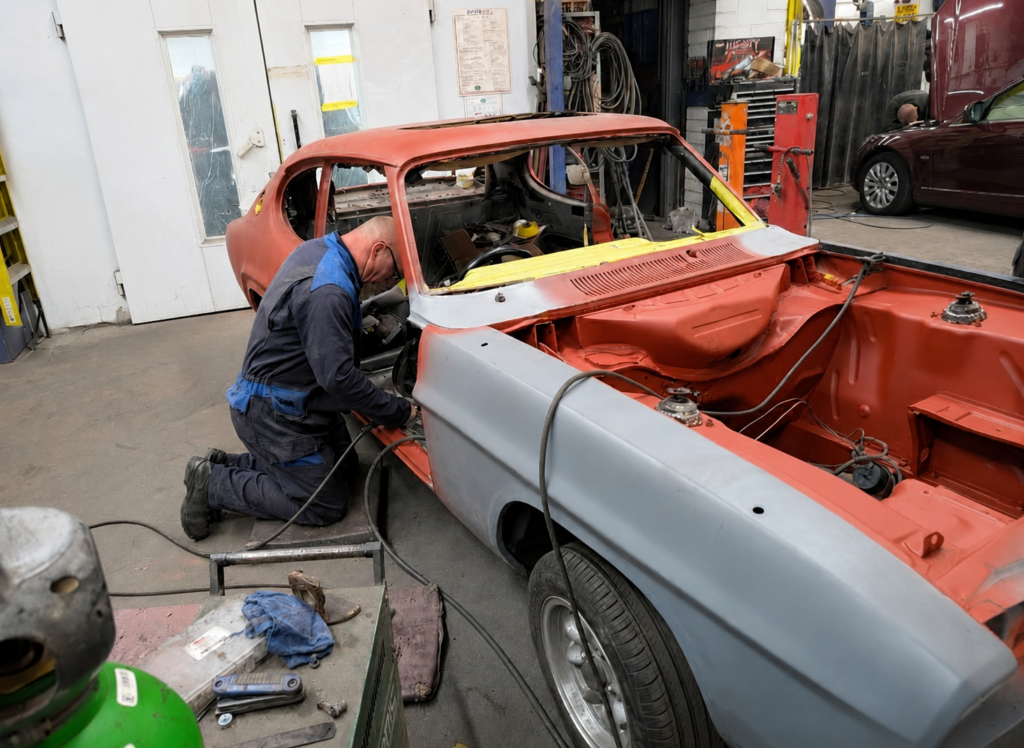
With the bodyshell stripped and protected, the project entered one of its most skilled and labour-intensive phases. Where necessary, body panels were removed to gain access to hidden areas, allowing every section of the shell to be repaired correctly rather than simply treating the corrosion that was immediately visible.
Every repair began by cutting back to sound metal before new steel was carefully fabricated and welded into place, restoring the Capri’s structural strength and original appearance. The process demanded many hours of skilled craftsmanship, ensuring each repair was virtually indistinguishable from the original factory construction.
Where replacement panels and components were required, they were sourced from trusted Ford classic specialists wherever possible to ensure the correct fit, profile and authenticity throughout the rebuild. By carrying out every repair to the highest standard, we preserved the character of this early Capri while creating a solid foundation for the next stage of the project.
7. Body Repairs Continue
With the structural repairs well underway, work focused on replacing the remaining damaged panels and restoring the Capri’s original lines. Corroded sections were carefully removed and replaced with new steel, while each repair was hand-fabricated and finished to blend seamlessly with the surrounding bodywork. As with every project we undertake, the emphasis was on repairing the car correctly rather than taking shortcuts, ensuring the integrity of the shell was fully restored.
One of the greatest challenges was the nearside front wing. Extensive corrosion, combined with evidence of poorly repaired accident damage carried out many years earlier, meant the panel was beyond economical repair and could not be restored to the standard we were aiming for. Fortunately, after an extensive search, we sourced a genuine New Old Stock (NOS) Ford wing—a rare find for an early Capri—which ensured the correct factory fit, panel profile and originality were retained.
While work on the bodyshell continued, other components were refurbished in parallel. The exterior brightwork was sent for re-chroming and polishing where required, preserving as much original trim as possible, while the wheels were professionally refurbished in readiness for reassembly. Carrying out these processes alongside the body restoration ensured every aspect of the Capri received the same level of care and attention.

8. Welding Complete – Epoxy Primer Applied
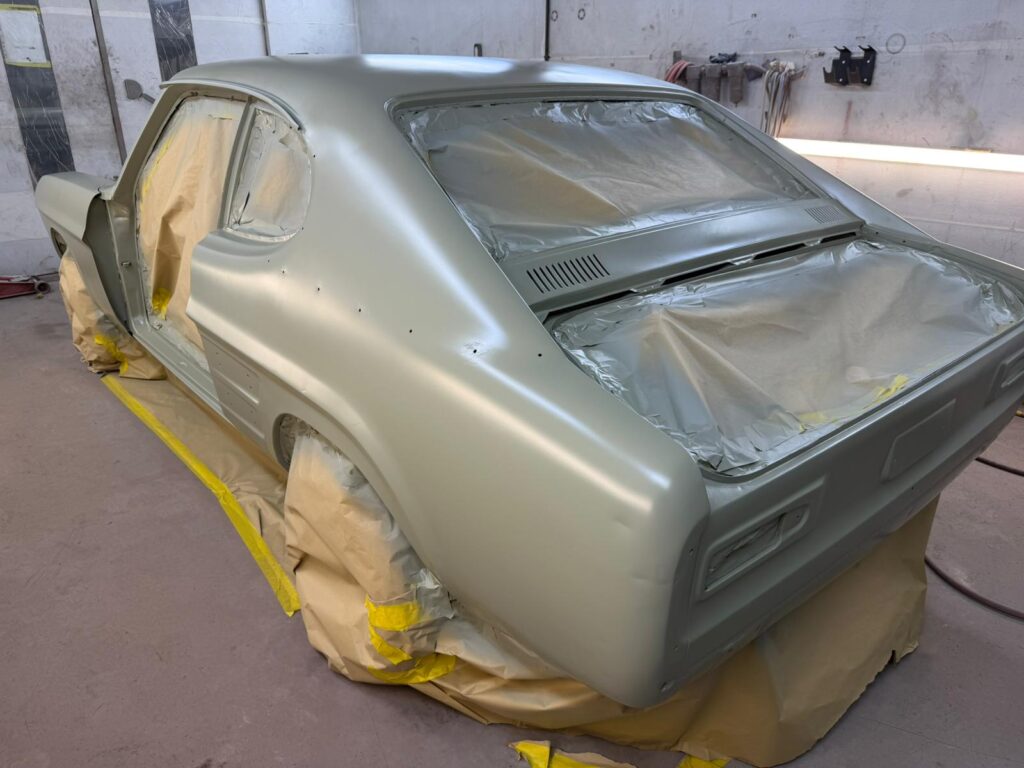
With all welding and metal fabrication complete, the Capri’s bodyshell reached another major milestone. Every repaired section, together with the bodyshell itself, was thoroughly prepared before receiving a full coating of high-quality epoxy primer.
Unlike conventional primers, epoxy primer forms an exceptionally durable, non-porous barrier that seals the bare steel against moisture and contaminants, preventing corrosion from developing beneath the paint system. It also provides the ideal foundation for the next stages of body preparation, protecting the many hours of skilled fabrication invested in restoring the shell.
From this point, the Capri moved into the bodyshop for meticulous final shaping and refinement. Every panel was individually checked, body lines perfected and even the smallest imperfections corrected, creating the crisp, straight finish required before the application of high-build primer and, ultimately, the final paint finish.
9. High-Build Primer – Preparing for Paint
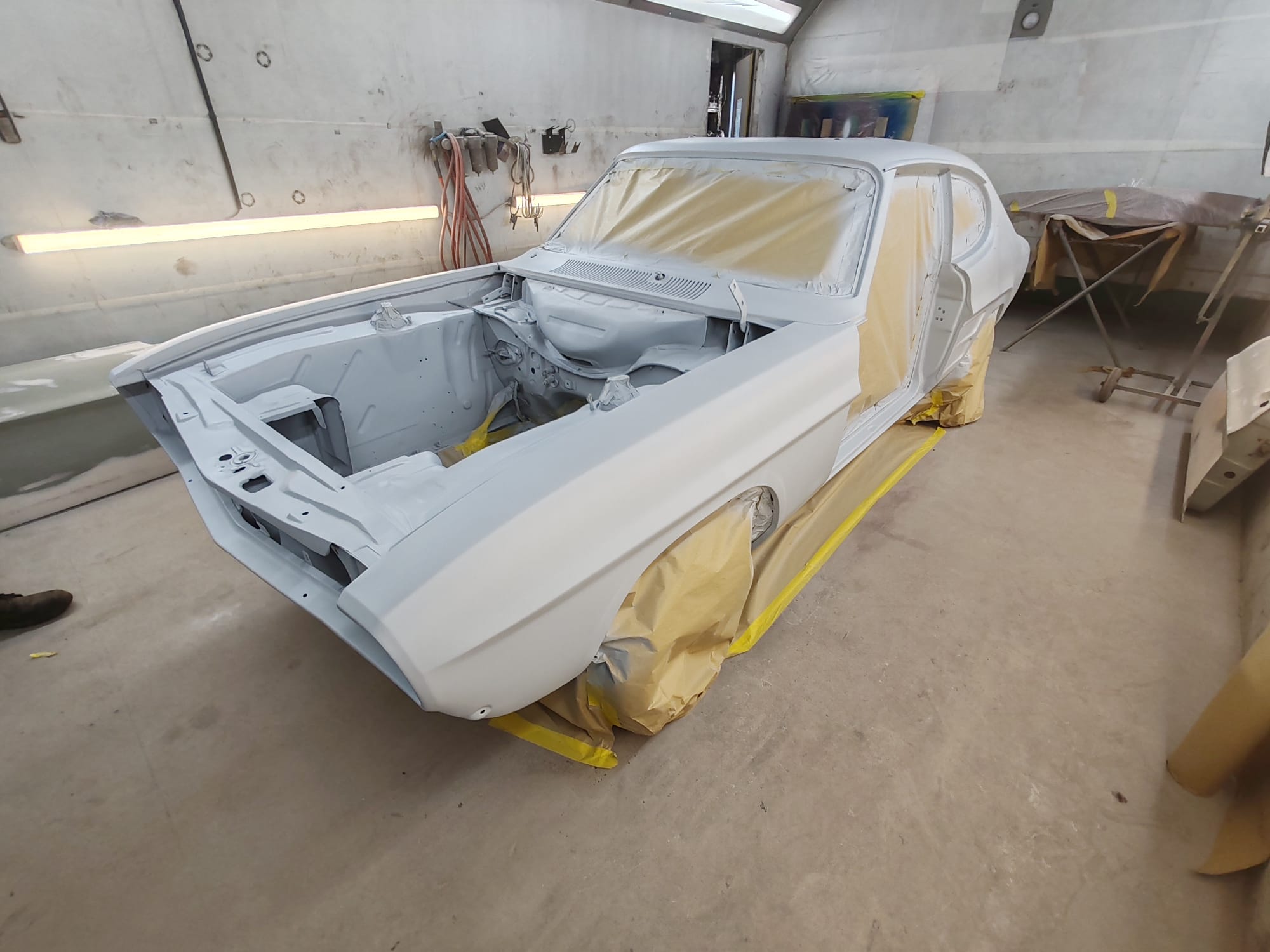
With the final shaping complete, the entire bodyshell, together with the repaired and replacement panels, was sprayed inside and out with high-build primer.
While epoxy primer provides long-term protection for the bare steel, high-build primer serves a different purpose. It creates a uniform surface that can be block-sanded perfectly flat, eliminating even the smallest imperfections that would otherwise remain visible beneath the finished paintwork.
Once fully cured, every panel was painstakingly block-sanded by hand. This labour intensive process refined every surface, ensuring the body lines remained crisp, the panel contours flowed naturally and every gap was perfectly aligned. Only then was the Capri ready to receive its colour, providing the flawless finish expected of a restoration carried out to the highest standard.

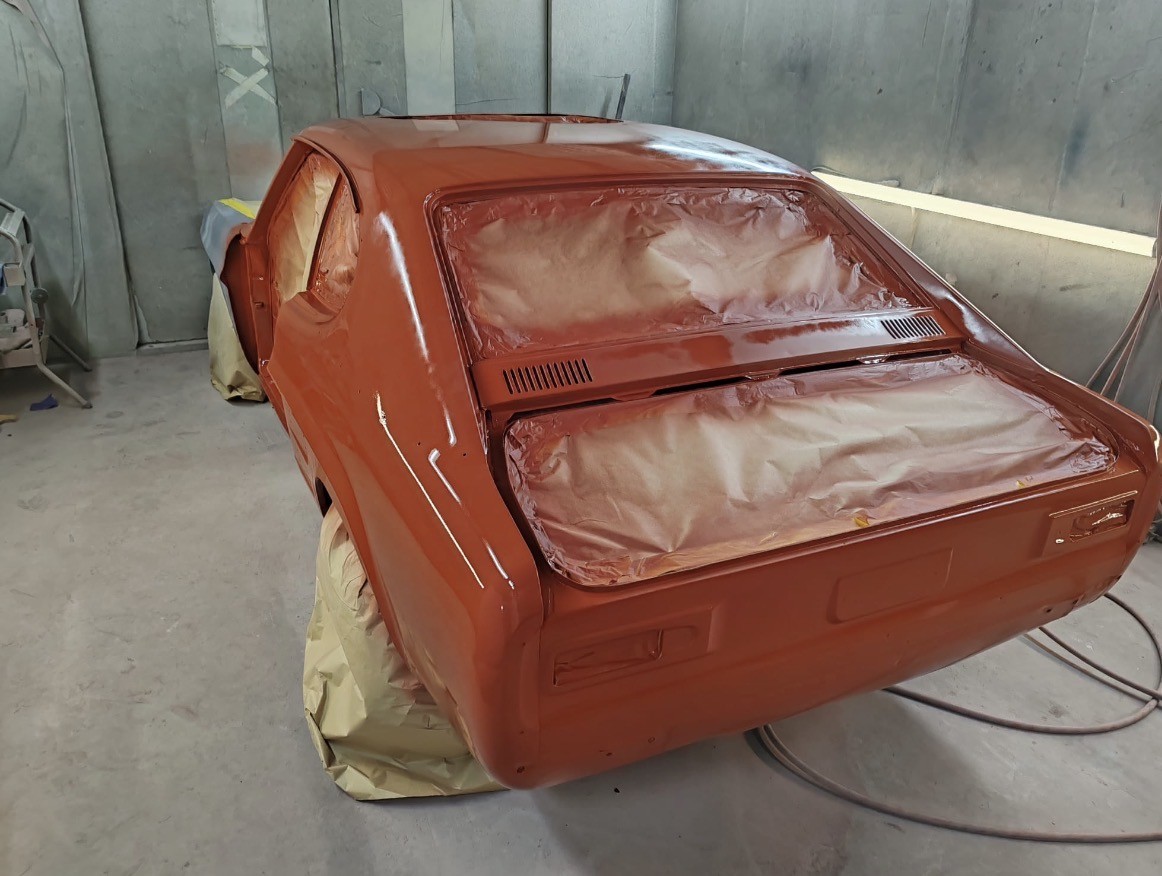
10. Vehicle Sprayed in Its Original Colour
After many months of fabrication, metal finishing and meticulous body preparation, the Capri was finally ready for colour.
The bodyshell was refinished inside and out in its original factory shade of Sebring Red using modern paint materials and techniques. Applying colour to every visible and hidden surface not only creates a uniform, factory-correct appearance but also provides outstanding long-term protection against the elements.
The rich finish brings the Capri’s distinctive lines back to life, showcasing the quality of the work beneath. While faithfully reflecting the car’s original appearance, the modern paint system offers greatly improved durability, gloss retention and resilience, ensuring the finish will look its best for many years to come.
11. Interior Sound Deadening
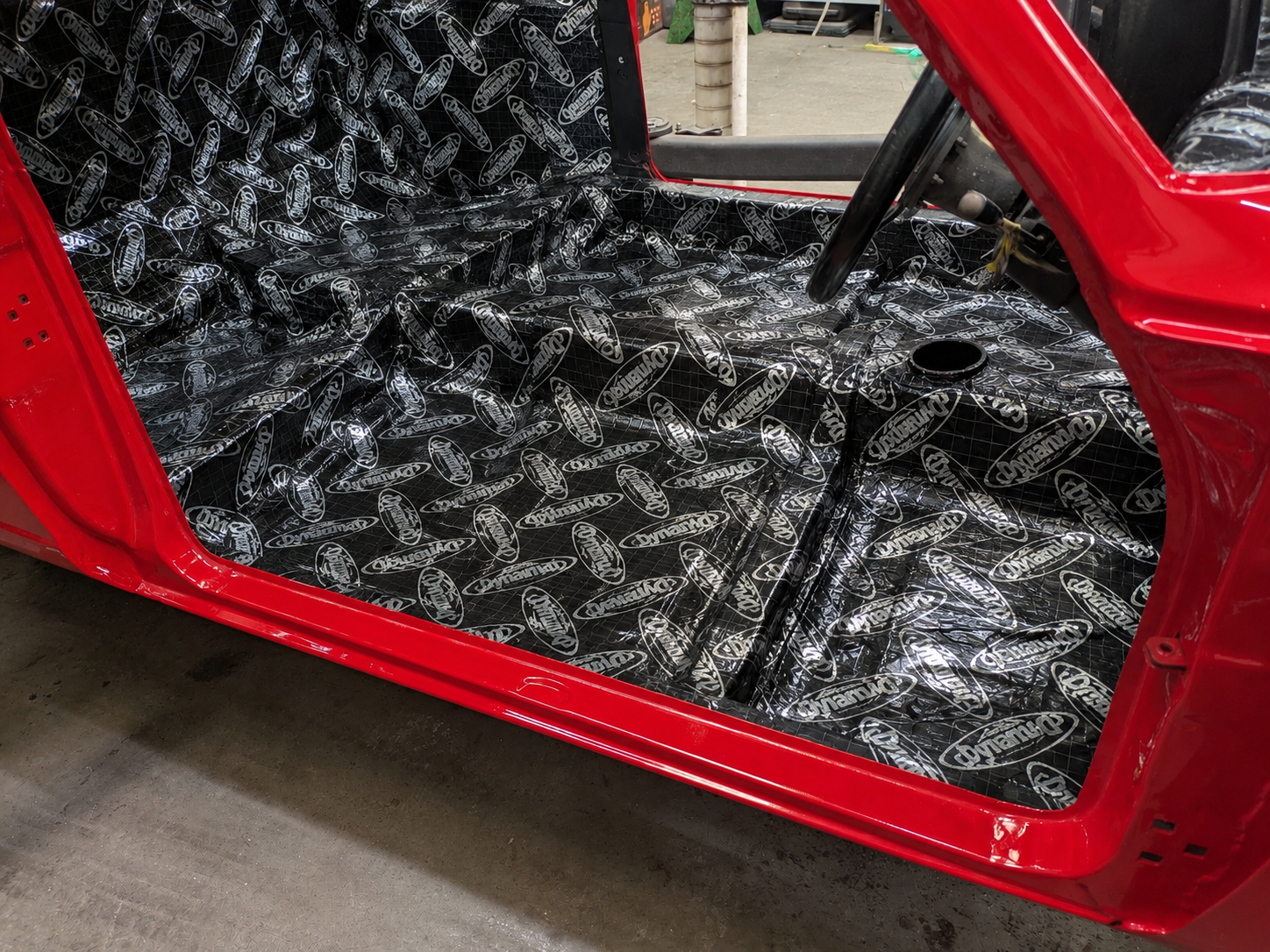
Before the interior was refitted, the cabin was lined throughout with Dynamat sounddeadening material. Applied to the floorpan, transmission tunnel, rear quarters and other key areas, it significantly reduces road noise, vibration and heat transfer, improving comfort without altering the Capri’s original appearance.
Although hidden beneath the carpets and trim once the interior is reassembled, this upgrade makes a noticeable difference to the driving experience. The cabin becomes quieter, more refined and better insulated from heat and vibration, allowing the owner to enjoy the character of the classic Essex V6 with the comfort expected of a modern grand tourer.
12. Underbody Protection
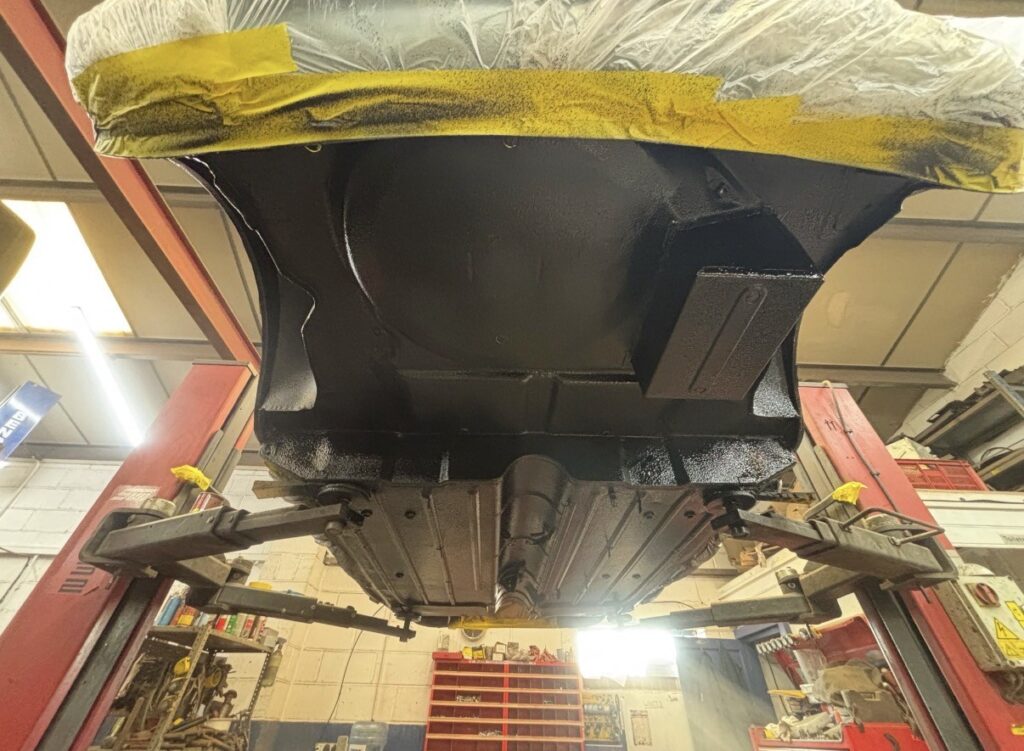
Although rarely seen, the underside of any classic car deserves the same level of attention as the bodywork above it. With all structural repairs complete, every repaired section was carefully sealed before receiving a durable stonechip coating, creating a tough, impactresistant barrier against road debris and everyday use.
Once the stonechip coating had fully cured, the entire underside was treated with a highquality protective wax. This penetrates seams, joints and box sections, creating an additional moisture-resistant barrier that helps guard against future corrosion while protecting the many hours invested in the structural restoration.
While much of this work will never be visible once the Capri returns to the road, it is one of the most important stages of the project. Protecting the vehicle from the inside out helps ensure the repairs carried out today continue to preserve the car for many years to come.
13. Reassembly Begins
With the paintwork complete, the most rewarding stage of the project could begin — bringing the Capri back to life.
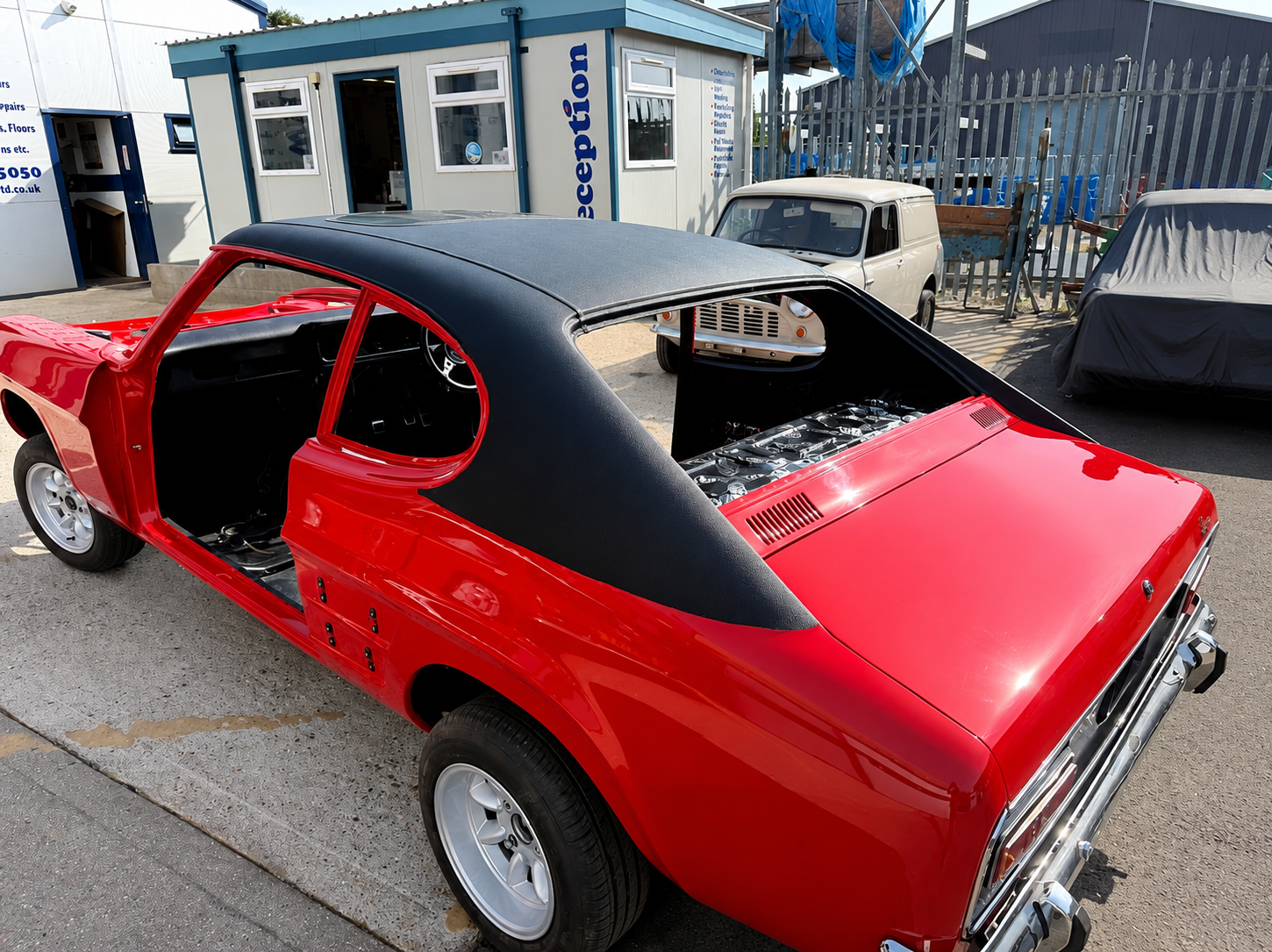
Reassembly gathered pace as every refurbished and restored component found its way back onto the bodyshell. The suspension, steering, braking and fuel systems were rebuilt or renewed where necessary, while every mechanical component, electrical system and trim item was carefully reinstalled, adjusted and tested. The refurbished wheels were fitted with a new set of tyres, completing the Capri’s distinctive period appearance.
To preserve its unmistakable 1970s character, a brand-new vinyl roof was sourced and professionally fitted, recreating one of the defining styling features of the era. At the same time, the interior was transformed with a new headlining, expertly installed by a specialist trimmer, together with new carpets and insulation to complement the Dynamat fitted earlier in the project.
As the weeks progressed, the Capri evolved from a freshly painted bodyshell into a complete motor car once again, with every component installed with the same care and attention to detail that had defined the project from the very beginning.

14. The Heart of the Capri
Although the 3.0-litre Essex V6 had proved to be in excellent mechanical health during the initial recommissioning work, refitting it in its tired, well-used condition would not have done justice to the quality of the restoration.
The engine was therefore carefully detailed before being reunited with the restored bodyshell. The block was refinished in the correct period Old Ford Blue, while external components were cleaned, refurbished or replaced where necessary. A professionally refurbished alternator and starter motor completed the transformation, ensuring the engine bay looked every bit as impressive as the rest of the vehicle while maintaining its authentic period appearance.
Reuniting the refreshed Essex V6 with the restored bodyshell marked another major milestone. Retaining the original engine not only preserved an important part of the Capri’s history but also ensured the owner could continue to enjoy the character, performance and unmistakable soundtrack that have made the Essex-powered Capri an icon for generations of enthusiasts.
15. The Finished Article
With the restoration complete, the Capri underwent a full geometry check to ensure the steering and suspension were correctly aligned before entering an extensive programme of road testing. This allowed us to fine-tune the car, verify that every mechanical and electrical system operated correctly, and confirm it drove exactly as a properly restored Essex-powered Capri should.
Although vehicles of this age are exempt from MOT testing, we believe an independent inspection provides valuable reassurance for both ourselves and our customers. The Capri was therefore presented for an MOT, where it achieved a clean pass with no advisory items, confirming the quality of the work and the condition of the vehicle.
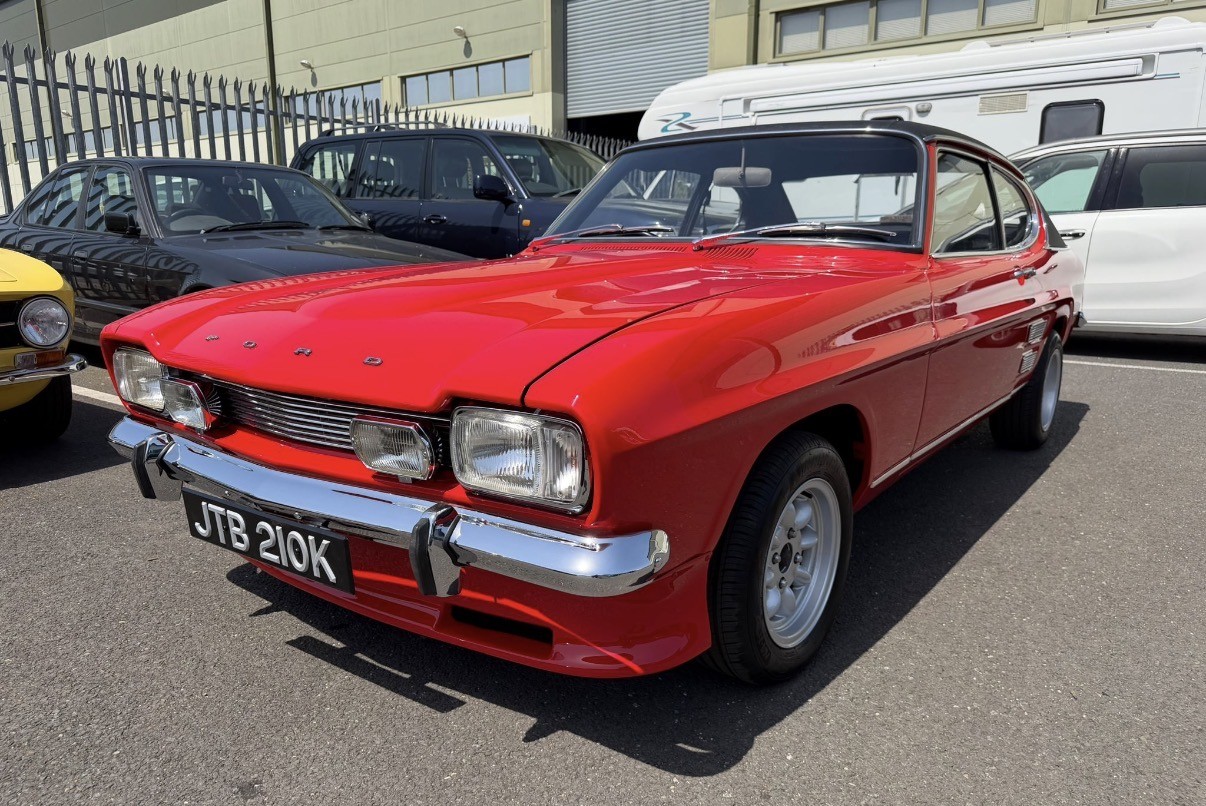
Following one final inspection, the Capri was valeted, polished and prepared for collection. The transformation was remarkable. What had arrived as a tired classic requiring extensive structural repairs, body restoration and careful recommissioning had been returned to a condition befitting one of Ford’s most iconic sporting cars.
Protected for the future and ready to be driven once again, the finished Capri retains all of its period charm while offering the reliability and confidence to be enjoyed for many years to come.
16. Back Where It Belongs
After many months of skilled craftsmanship, the transformation was complete. What had arrived at Trickett Welding as a tired Capri requiring extensive structural repairs, careful recommissioning and a complete restoration had been returned to an exceptional standard while retaining the character and individuality that make these early Essexpowered cars so special.
Every stage of the project reflects the care, patience and attention invested throughout, from the structural welding hidden beneath the paintwork to the flawless Sebring Red finish, beautifully detailed engine bay and professionally retrimmed interior. The result is far more than a restored classic Ford; it is a Capri ready to be driven, enjoyed and admired for many years to come.
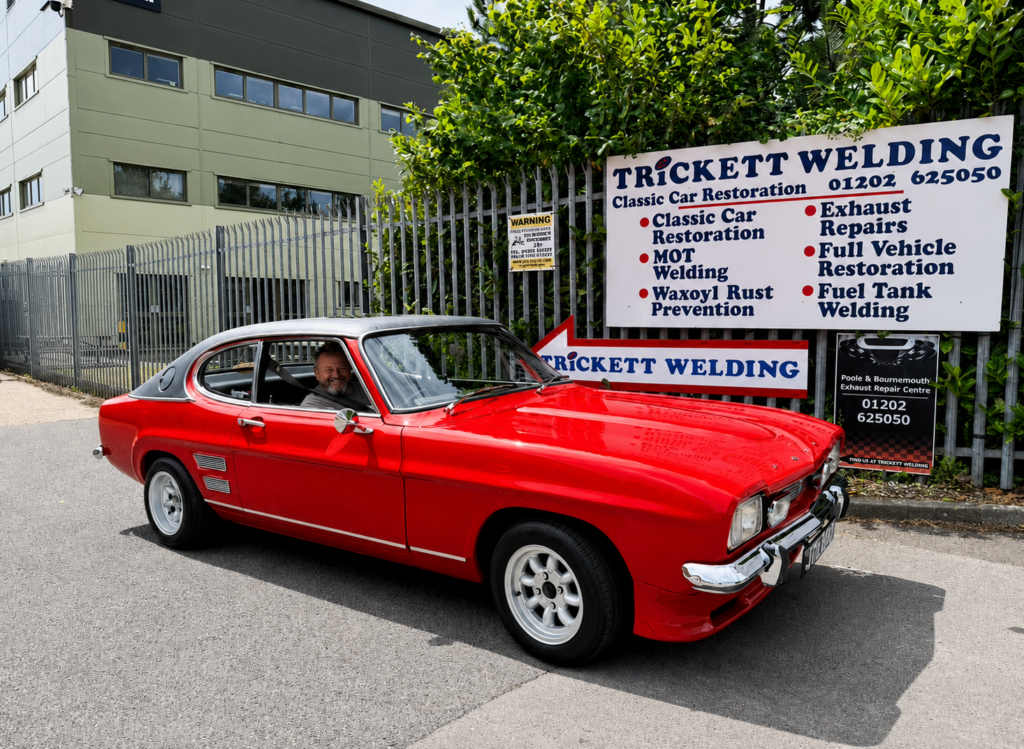
Handing the keys back to its delighted owner marked the final chapter of a remarkable project. Seeing the smile on his face as he drove away made the many hundreds of hours invested worthwhile and perfectly demonstrated why we remain so passionate about restoring these wonderful cars.
For us, this project represents everything a sympathetic restoration should be. It is not simply about repairing corrosion or applying fresh paint; it is about preserving an important piece of Ford’s motoring heritage so that another iconic Capri can continue creating memories for generations to come.
 01202 625050
 info@trickettwelding.co.uk